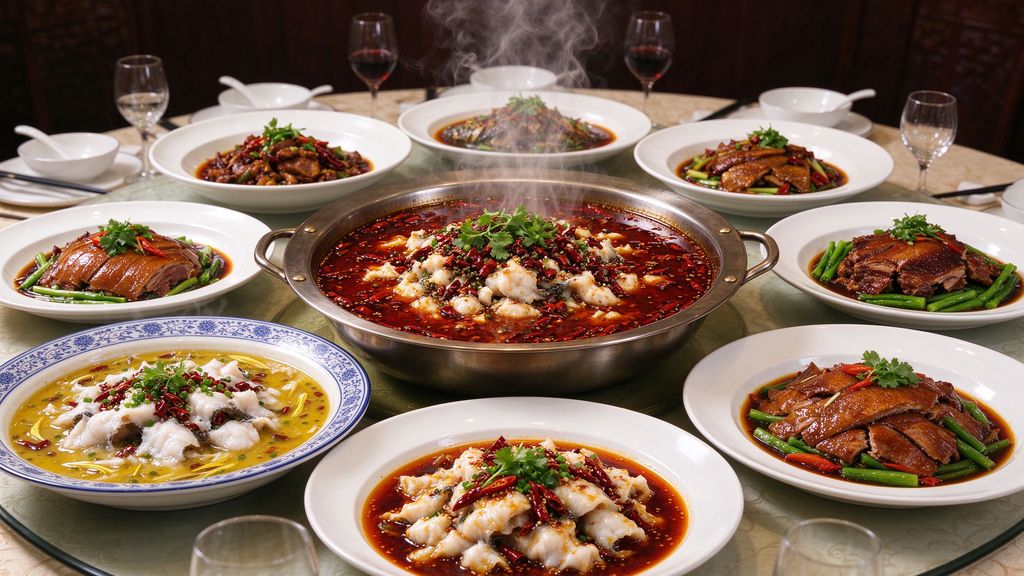
Menus in Chinese restaurants are usually in Chinese; busy places in big cities add English or pictures. The safest trick: check recommended dishes on maps or review apps, or point at another table and say "same as that table".
Spice communication matters. "Wei la" (mild) is already very spicy for most foreigners; say "bu la" (no chili) for near-zero spice, and "shao you shao yan" for less oil and salt.
Dishes come with staples: order a few dishes, then rice or noodles per person. Tables share family style, with dishes in the middle for everyone.
Chopstick etiquette: never stick chopsticks upright in rice (resembles incense at a shrine), never point with them, and use serving chopsticks when possible. Ask for a spoon if needed.
To pay, say "mai dan" (the bill) or "jiesuan". Many places use QR ordering and mobile payment; cash works too. Tipping is not customary in China.
For authentic flavour, skip tourist restaurants - the small eateries in residential areas often hide the most amazing dishes.

