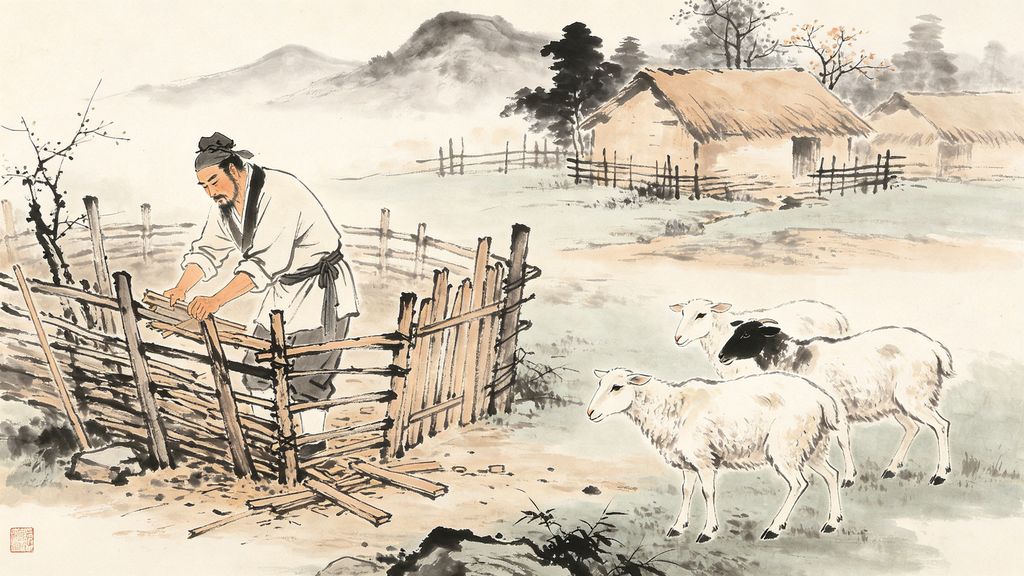
Long ago a man sold spears and shields. Raising his shield, he declared: "My shield is the strongest — it stops anything!" Then raising his spear: "My spear is the sharpest — it pierces anything!"
Someone asked: "Then what happens if you stab your shield with your spear?" He could not answer and walked away blushing. There is no unstoppable spear, and no unbreakable shield.
"Self-contradiction" means saying or doing conflicting things — like claiming "I never lie" while deceiving people every day. Think before you speak, stay consistent, and do not slap your own face.
The story: in ancient times, a weapons seller was at the market selling spears and shields. Raising his shield, he boasted: "My shield is so solid that nothing can pierce it!" Then raising his spear: "My spear is so sharp that it pierces everything!" A bystander asked: "Then what happens when your spear strikes your shield?" The seller was left speechless.
The idiom "spear and shield contradicting each other" comes from this tale. When a person words or deeds contradict themselves, they are at odds with themselves; the very word "contradiction" in modern Chinese comes from this story.
Usage: "you want to lose weight but eat midnight snacks - is that not self-contradictory?" "He agreed a moment ago and now opposes it - completely contradictory." It is one of the most common idioms for criticising illogical reasoning.
The source is Han Feizi, where the classic line reads: "using your spear to strike your shield - how?" This is a textbook self-referential paradox; Chinese thinkers were using it for debate 2,000 years ago.
English: to contradict oneself, or self-contradictory. Similar paradox stories exist in English, but the Chinese version is earlier and better known.
Value: the idiom reminds us to keep words and deeds consistent and logically coherent. Before writing, speaking or planning, ask: do these two things clash? That is the most basic thinking drill.
A quick language drill: try making a sentence - "he says protect the environment but litters everywhere - truly self-contradictory." Using this idiom in daily chat makes your Chinese instantly natural. Remember the spear-and-shield seller; before you speak, check your own words do not clash.
Make a game of it: say a self-contradictory sentence and let friends find the flaw, like "I never talk". This game deepens your understanding of logical consistency and makes the idiom memorable. Before writing your next argumentative essay, check that your own points do not contradict themselves.
A modern variant: people now say "dǎ liǎn" (slap in the face) when your own words are overturned by facts - same spirit as the spear and shield. Example: "he just said he was dieting, then ate three bowls of noodles - total face slap." From the ancient spear and shield to today internet slang, Chinese keeps finding new words for the same logical irony.
To sum up the thinking lesson: before making any claim, ask three questions - does it contradict facts? does it contradict my other claims? does it contradict my actions? Pass all three and your position stands. This modern thinking drill distilled from an ancient fable is the real reward of learning Chinese.

