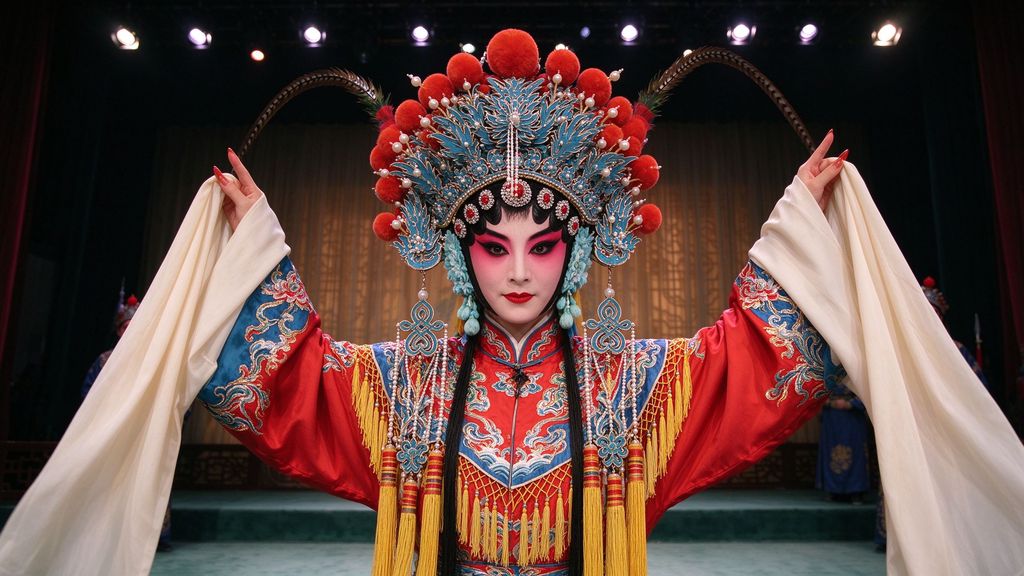
China has 300+ opera forms; Peking Opera is the national treasure, while Kunqu, Yue, Yu and Huangmei each have devoted fans.
Kunqu: one of the oldest, UNESCO Intangible Heritage since 2001, delicate singing; the classic is The Peony Pavilion.
Yue opera: from Zhejiang, mostly female performers, soft and lyrical; the classic is Butterfly Lovers.
Yu opera: Henan, high-pitched and forceful, popular across the north; the classic is Mulan.
Huangmei opera: Anhui, catchy and melodic; "Marriage of the Fairy and the Mortal" is known nationwide.
How to watch: read the synopsis first and watch the four skills (singing, speech, acting, acrobatics); pick performances with bilingual subtitles.
Venues: Beijing Chang an Grand Theatre, Shanghai Tianchan Yifu Stage, Suzhou Kunqu school - many welcome foreigners.
Speaking of Chinese opera, most people first think of Peking opera. In fact China has over three hundred regional operas; Peking opera is just the most famous.
Besides it: Kunqu, Henan opera (yuju), Shaoxing opera (yueju), Huangmei opera, Sichuan opera. Each has its own dialect and melody, its own audience.
Kunqu is one of the oldest, called "ancestor of a hundred operas", listed as world intangible heritage in 2001. Its melody is exquisite and delicate, costumes splendid; every glance and smile is drama.
Yueju from Zhejiang has a soft beautiful melody, mostly female performers, called "China second opera". Huangmei opera from Anhui is lively; its most famous play is Tian Xian Pei. Yuju from Henan is powerful and high-pitched with the most viewers.
Sichuan opera astonishes with "face changing": at a turn the actor swaps masks so fast viewers cannot see. Face-changing is Sichuan opera specialty, among the most mysterious performances.
Four basics of Chinese opera: singing, reciting, acting, fighting. An excellent performer trains for a decade or more.
When in China, watch an opera. Remember: "jīngjù" Peking opera, "kūnqǔ" Kunqu, "biànliǎn" face-changing, "chàng niàn zuò dǎ" the four skills. Not understanding the words is fine - watch movement, costume, expression; you feel the beauty.
Chinese opera is poetry written by Chinese people in voice and body.
A tip for watching: learn the plot first. Peking opera Farewell My Concubine and Huangmei opera Tian Xian Pei have moving stories. Many theatres now show Chinese-English subtitles. One show lets you enjoy traditional art and feel the applause and warmth of Chinese audiences.
Chinese opera costumes are artworks themselves: emperor dragon robes, general back-flags, dan headdresses - each exquisite. When watching, notice the actors eyes - Peking opera eyes tell a thousand stories. If you like, try a classic tune phrase - though singing it is harder than learning Chinese! One show and you see: Chinese opera is not outdated art but living tradition.

