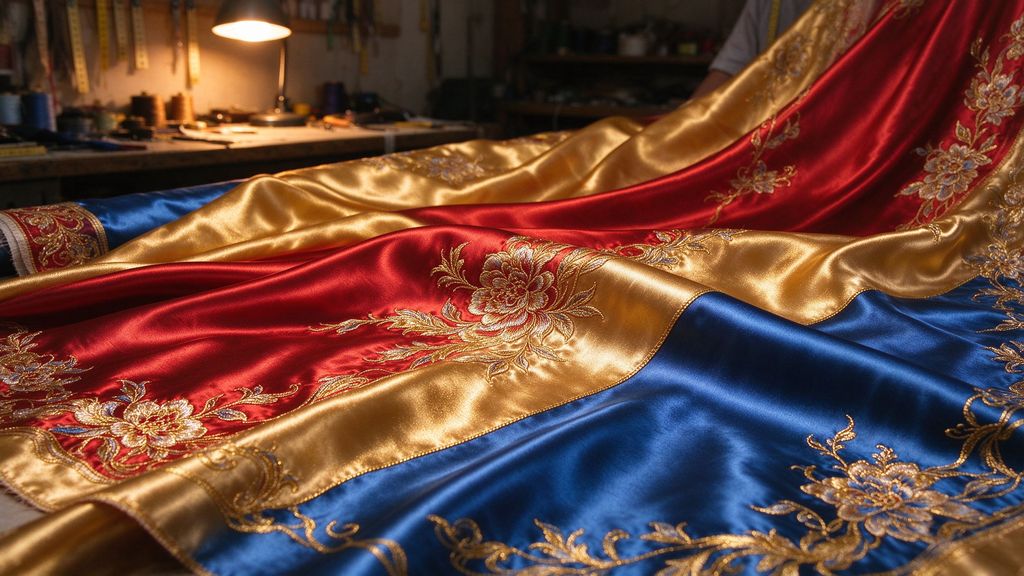
The Silk Road linked ancient China with Central Asia, West Asia and Europe for trade and cultural exchange - named for its main cargo, silk, and spanning over 7,000 km.
Two main lines: the overland route (from Chang an through the Hexi Corridor and Xinjiang, over the Pamirs to Central and West Asia) and the maritime route (from Guangzhou and Quanzhou across the South China Sea to Southeast Asia, India and Africa).
What moved: China exported silk, porcelain, tea, papermaking and iron-smelting skills; it received grapes, pomegranates, sesame, Buddhism, music and dance, and Roman glassware.
Cultural exchange: Buddhism entered China via the road (the White Horse Temple is the earliest witness); Xuanzang sought scriptures westward, Faxian travelled both land and sea - the road was a crossroads of religion, music and art.
Key cities: Dunhuang (Mogao Caves), Kashgar and Samarkand (in modern Uzbekistan) were pearls of the road; today the Belt and Road Initiative is seen as its modern spirit.
How to feel it: drive the Gansu Hexi Corridor (Dunhuang-Jiayuguan-Zhangye), wander Kashgar old town, visit the Quanzhou Maritime Museum.
The Silk Road was the ancient trade route linking China with Central Asia, West Asia, Europe and Africa - over 7,000 km, existing more than two millennia.
In the second century BC Zhang Qian twice journeyed west, opening the road from the Central Plains - the Silk Road began.
Along it China exported silk, porcelain, tea and lacquer; imported grapes, walnuts, pomegranates, glassware, gold and silver, spices.
The name came from German geographer Richthofen in 1877, silk being the earliest and most iconic Chinese export.
It had land and sea routes. The land route left Chang An, passed the Hexi Corridor and Tarim Basin, crossed the Pamirs to Central Asia, Persia and the Mediterranean.
The maritime route left Guangzhou and Quanzhou, through Southeast Asia and the Indian Ocean to Arabia and east Africa; Quanzhou was once among the world largest ports.
Its cities were immensely prosperous: Dunhuang the throat, Chang An the start, Samarkand the hub, Rome the end.
It was also a road of civilisations: Buddhism, Islam and Christianity spread east; papermaking, printing and gunpowder travelled west.
Xuanzang seeking scriptures and Marco Polo coming to China both walked it; Marco Polo Travels made Europe long for China.
Its trade peaked in Han and Tang. In Tang Chang An merchants of every nation crowded; Persian silver coins circulated like Tang copper.
As maritime trade rose the land route declined, yet its mark remains: carrots and pomegranates in Chinese dishes are Silk Road "immigrants".
In 2014 the "Silk Roads: the Routes Network of Chang An-Tianshan Corridor" entered world heritage. Today the Belt and Road Initiative renews the ancient route.
The Silk Road proves: exchange is the most powerful engine of human civilisation progress.
The cup of Chinese tea in your hand, the grape you eat - both once travelled this road. The Silk Road is our shared memory.
A thousand years of camel bells, ten thousand li of trade routes - civilisation grows great through exchange. Read the Silk Road and understand why the world is connected.

