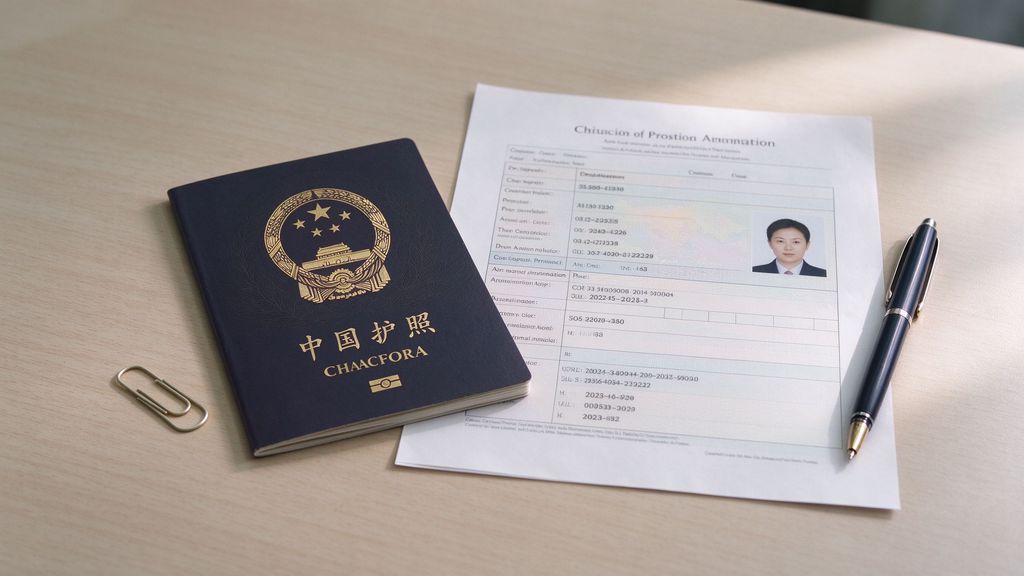
China visa photo rules: white background, taken within the last 6 months, front-facing, no hat or headphones. The size is usually 33mm x 48mm, with the head taking up 70% to 80% of the frame.
Common mistakes: background not white, hair covering the eyebrows, colored contacts, an outdated photo, or a face that is too big or too small. Also: the photo must look like you. Officers review hundreds of photos a day and notice instantly.
Tip: go to a proper photo studio and say "China visa photo" — they know the standard. Print two copies and keep a digital version for both online and on-site applications.
Applying for a China visa, the photo looks trivial yet is one of the most common rejection causes. An unqualified photo means extra material and delays, or even a returned application.
Official requirements are strict: a colour frontal bare-head photo taken within six months, white background, 48mm by 33mm.
Your head should occupy about two-thirds of the frame: crown-to-chin about 28-33 mm; both ears visible; hair must not cover eyebrows or eyes.
No hats or headwear (except religious), no sunglasses; no tinted glasses; even reading glasses must have narrow frames and no glare.
Expression must be natural: no smiling with teeth, no frowning, no open mouth. Lips closed, eyes looking straight at the camera.
No heavy retouching: no slimming, smoothing, or altered features; no heavy makeup. The officer needs to see "the real you".
No scans of old photos, no phone selfies printed out - selfie angles and lighting rarely pass; use a professional ID-photo studio.
A common oversight: the visa photo must not be the same as the passport photo. Many countries require a "recent" visa photo, distinct from the passport one.
Print quality matters: glossy or matte photo paper, not plain copy paper; no creases, stains or fingerprints.
Children have their own rules: babies no pacifiers, eyes open; children photographed alone, not held by an adult.
If rejected, centres usually ask for a retake on the spot; some offer photography service but pricier than outside - prepare in advance.
Final advice: carry two or three spare photos in separate folders. If lost, your trip is not delayed.
A qualified photo is the first step to a smooth application. Get the details right and your success rate doubles.
A few common myths: first, some think a prettier photo passes more easily, but officers want clarity and authenticity, not beauty; second, the photo must be within six months, and an old passport photo may be rejected; third, if visiting multiple countries, prepare photos separately since size requirements differ. Remember: better to spend an extra small fee on a professional photo than to delay the whole application over one picture.

