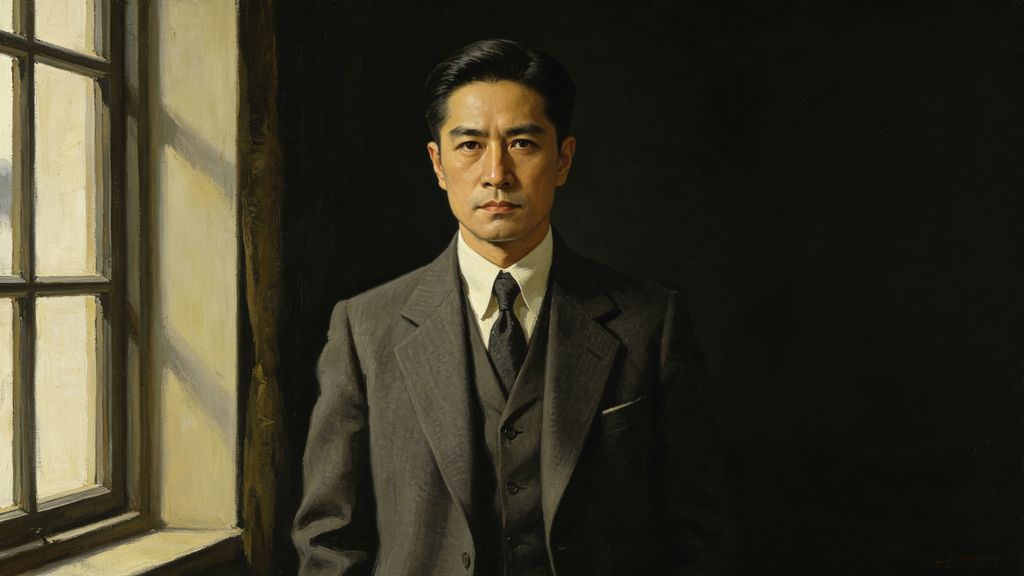
Sun Yat-sen (1866-1925), birth name Wen, courtesy name Zaizhi, art name Yixian. He was the great forerunner of China's modern democratic revolution, honored as the "Father of the Nation." He led the 1911 Revolution that overthrew over 2,000 years of imperial rule and founded the Republic of China, making the idea of "republic" deeply rooted in people's hearts.
Sun Yat-sen was born into a peasant family in Xiangshan, Guangdong (today's Zhongshan City). He studied medicine in Hawaii and Hong Kong, but after seeing the Qing government's corruption, he decided on revolution. His early attempts repeatedly failed—he led uprisings ten times, and failed all ten. But he never gave up, finally succeeding in the 1911 Wuchang Uprising that overthrew the Qing.
Sun's core philosophy is the "Three Principles of the People": Nationalism, Democracy, and People's Livelihood. Nationalism meant overthrowing Manchu rule and achieving five-ethnic harmony. Democracy meant people have power, government has ability. People's Livelihood meant equal land rights and regulating capital. These three phrases are written in his will and became the KMT's platform.
Sun spent his whole life fighting for China's unity and democracy. He served as Provisional President, then yielded to Yuan Shikai; he was repeatedly wanted and forced into exile abroad. He said "The revolution is not yet complete; comrades must still strive"—these words from his will inspired generations of Chinese people.
On March 12, 1925, Sun Yat-sen died in Beijing at age 59. His mausoleum is on Purple Mountain in Nanjing, called Sun Yat-sen Mausoleum, a famous tourist site today. Many people visit every year. No matter how you view modern Chinese history, Sun Yat-sen's status as the forerunner of the Chinese revolution is undeniable.
Sun Yat-sen (1866-1925), personal name Wen, courtesy name Zaizhi, style Yixian, from Xiangshan, Guangdong (today Zhongshan), is the great forerunner of China democratic revolution, honoured as the "Father of the Nation". He led the 1911 Revolution that overthrew two millennia of imperial rule and founded the first republic in Asia.
Revolutionary career: he first studied medicine, then turned to politics. In 1894 he founded the Revive China Society in Honolulu; in 1905 in Tokyo he formed the Tongmenghui (United League) with the platform "expel the Manchus, restore China, establish a republic, equalise land rights". After the 1911 Wuchang Uprising, he was elected provisional president of the Republic of China.
Three Principles: nationalism (overthrow the Qing, national independence), democracy (republican government, civil rights), livelihood (equalising land, improving people lives). These are the essence of his thought and the banner of the revolution.
"The world for all" (tian xia wei gong): his lifelong ideal, written everywhere he spoke - the ideal society from the Book of Rites: the world belongs to everyone, not one family. Both the Sun Yat-sen Memorial Hall in Taipei and the Sun Yat-sen Mausoleum in Nanjing bear the four characters.
Relevance today: he died in Beijing in 1925, urging "the revolution is not yet accomplished; comrades must still strive". He never saw national unity, but his ideals - unity and rejuvenation - remain the goals Chinese people pursue today.
Places: the Sun Yat-sen Mausoleum in Nanjing (built into Purple Mountain), Guangzhou Memorial Hall, his former residence museum in Zhongshan, and the memorial hall at Fragrant Hills in Beijing. Each site conveys the spirit of this great man.

