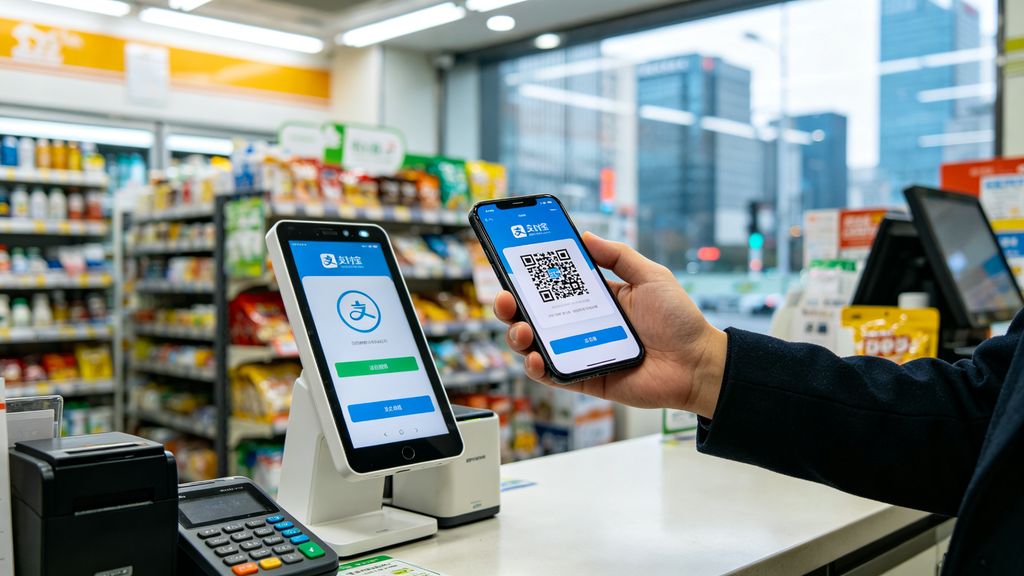
In my first week in China, the first thing I did wasn't visiting the Great Wall—it was buying a bottle of water at a convenience store. I pulled out my wallet to pay cash, but the clerk pointed to a QR code on the counter: "Scan this." I was stunned. That was my first realization that in China, cash is basically optional.
China has two dominant mobile payment apps: Alipay and WeChat Pay. Almost every store, restaurant, convenience store, wet market, and even street vendors selling roasted sweet potatoes have a QR code. You just scan it with your phone, enter the amount, press your fingerprint, and done. The whole process takes less than three seconds.
The biggest headache for newcomers is linking a bank card. What many people don't know is that Alipay and WeChat now support directly linking foreign credit cards. There is an annual RMB 50,000 limit, but that's more than enough for daily meals and shopping. The setup takes about 10 minutes—upload a photo of your passport and credit card, wait a few hours for approval, and you're good to go.
After a month of using it, I realized I could leave my wallet at home entirely. Scan for breakfast, scan for lunch, scan for coffee, scan for taxis, even street parking fees are QR-code only. Your phone is your wallet, your keys, your everything. Sometimes I wonder: if I lost my phone, would I be completely stuck?
Of course, mobile payment has its downsides: elderly people who don't know how to use smartphones can't pay; some small vendors only take cash; and if your phone dies, you're literally penniless. But overall, carrying a phone is way more convenient than carrying a wallet in China. If you plan to visit China, download Alipay or WeChat in advance, link your credit card, and you'll thank me later.
A foreign tourist record of living in China "without a wallet" - one phone for a week: meals, transport, shopping, tickets, all QR-solved.
First experience: his first Alipay at a convenience store - the owner said "scan it"; he marvelled "that is it?" "Ten times faster than cards."
Everyday scenes: breakfast stalls, taxis, scenic tickets, supermarket checkout - "in China, the phone is your wallet, transit card, ticket and ID."
Surprise: buying metro tickets by phone, paying market vegetable sellers, even QR-paying a sugar-hawthorn street vendor. "Even street stalls scan - so advanced."
Comparison: "in Europe I carry cards and cash; in China one phone does everything." He learned hongbao (red packets), calling it "the happiest payment".
Observations: parking, utilities and more settle by phone - "China digital life is a whole system, not single features."
Significance: an international experiencer of Chinese mobile payment - showing why China is moving toward a cashless society.
For readers: download Alipay and WeChat Pay before visiting China - one phone can take you everywhere.

