Qu Yuan (c. 340-278 BC) was a nobleman and minister of the state of Chu in the Warring States period. Talented and prolific, he wrote many poems, hoping to strengthen Chu and improve people's lives.
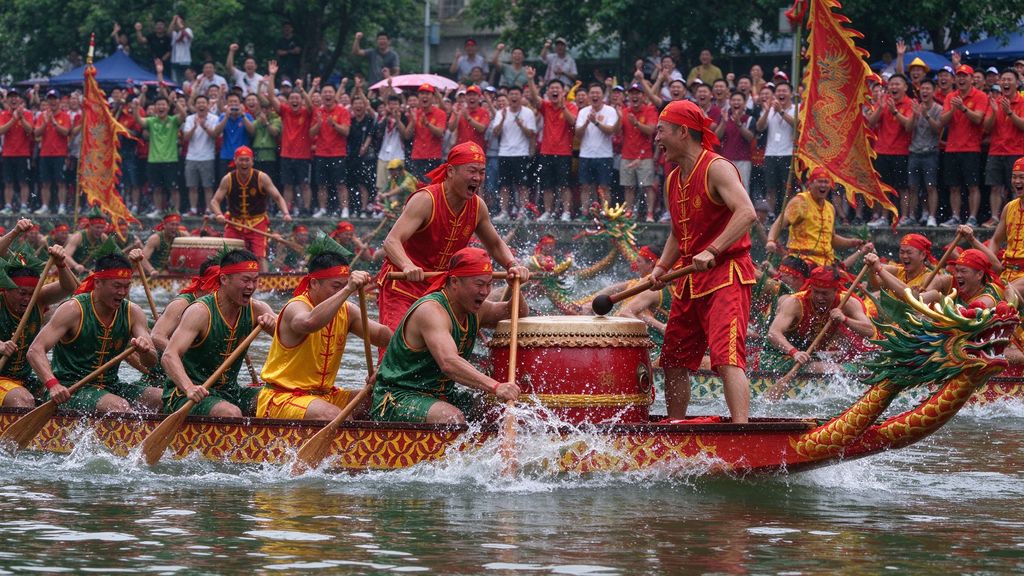
But the king did not trust him and sent him away. When Chu later fell, Qu Yuan was heartbroken and drowned himself in the Miluo River. People rowed out to find him and threw zongzi into the water — that is the origin of the Dragon Boat Festival.
His most famous works are "Li Sao" and "Nine Songs". He loved using fragrant herbs as symbols of noble character. Every Dragon Boat Festival, Chinese people remember this patriotic poet.
Introducing the man: Qu Yuan (c. 340-278 BC), a great poet and statesman of the Chu state in the Warring States period. Born to a noble family and broadly learned, he was trusted early by King Huai and served as a senior minister, advocating an alliance against Qin.
His masterpiece Li Sao is the first long lyric poem in Chinese literature, nearly 2,500 characters of dazzling imagination - fragrant plants, divine journeys, questions to heaven. The line "the road ahead is long and far; I will search high and low" expresses relentless pursuit of ideals and is still quoted everywhere.
His end was tragic: framed by rivals and exiled, he drowned himself in the Miluo River on the fifth day of the fifth lunar month after the Chu capital fell to Qin. People rowed boats to search and threw zongzi into the river to distract fish from his body - the origin of Dragon Boat Festival customs.
Why has China honoured him for 2,000 years? Because he carried loyalty and purity to the extreme: loyal to his state, uncorrupted in his ideals. His spirit of dying rather than compromising became a banner for Chinese scholar-officials.
In 1953 the World Peace Council named him a world cultural figure alongside Copernicus and Shakespeare - proof his value transcends borders.
Travel connections: Zigui in Hubei is his hometown with a memorial hall; Miluo in Hunan has the Quzi Temple, and every Dragon Boat Festival hosts grand dragon-boat races and ceremonies. Visiting brings the poet life closer.
One more fact: besides honouring Qu Yuan, Dragon Boat Festival also carries ancient meanings of warding off evil and plague - May was the "poison month", hence mugwort and sachets. If you visit China around the festival, buy a sachet for your bag - pretty and full of good meaning.
A common misconception: eating zongzi did not begin immediately after Qu Yuan death; the custom took centuries to form, crystallising after the Southern and Northern Dynasties by merging the memory of Qu Yuan with existing May plague-warding practices. Festivals are living cultures that keep growing through history.
Qu Yuan contribution cannot be overstated: he was the first great poet in China recorded by name, creator of the Chuci (Songs of Chu) form, the first to pour personal feeling into verse and founder of the lyric tradition. The "fragrant herb and fair lady" imagery of Li Sao became a fixed symbol of noble character for countless later poets. At advanced Chinese levels, Qu Yuan is unavoidable.

