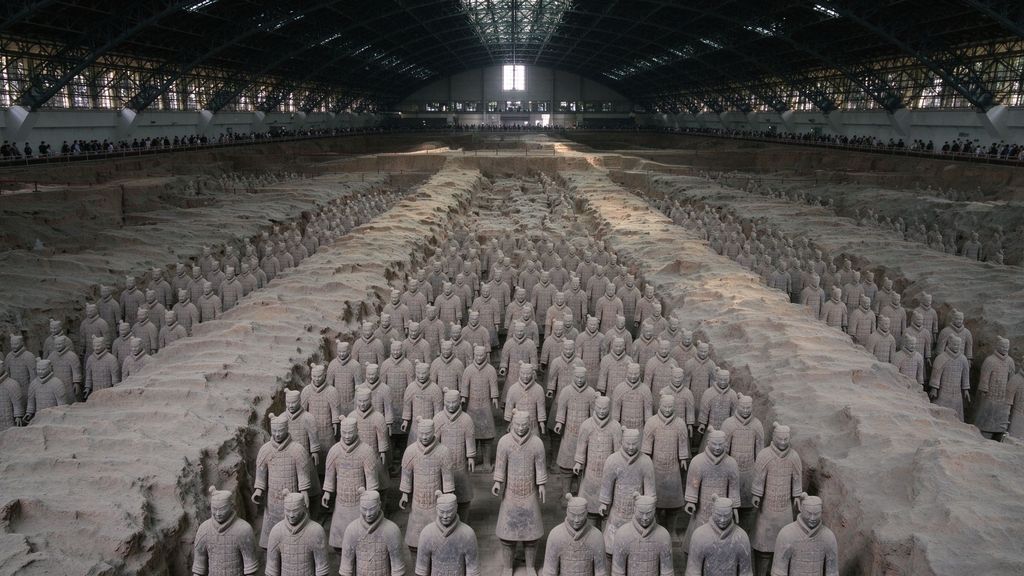
The Terracotta Army in Lintong, Xi an, is the burial pit of Qin Shi Huang mausoleum, discovered in 1974 by farmers digging a well; a UNESCO World Heritage site.
Scale: four pits found - Pit One largest (~6,000 warriors), Pit Two (cavalry + chariots), Pit Three (command post), Pit Four empty.
Craft: every face differs; figures are about 1.8m, 1:1 life size; they were painted when unearthed, the colours fading on contact with air.
Highlights: the Pit One panorama (most stunning), the Bronze Chariots hall, and the restoration zone where archaeologists work live.
Practical: ticket RMB 120; take a guide or audio tour; 3-4 hours; reachable by metro from Xi an.
Context: Qin Shi Huang unified the states, script and measures; the army embodies his vision of an empire in the afterlife.
Underground near Xi An lies an army - over eight thousand life-size terracotta warriors in neat formation, guarding an imperial tomb. This is the Terracotta Army of Qin Shi Huang.
In 1974, farmers digging a well in Lintong, Shaanxi, unearthed a few pottery fragments. No one imagined the dig would reveal a world-shocking discovery.
Archaeologists found three enormous pits covering over twenty thousand square metres, with about eight thousand terracotta warriors and horses plus ten thousand bronze weapons.
The warriors are part of the mausoleum of Qin Shi Huang (259-210 BC). After unifying the six states, he wished to keep a mighty army after death and ordered this "underground legion" built.
Every warrior is unique: about 1.8 metres tall, each face different - solemn, smiling, young, weathered. Craftsmanship extends to hair strands and fingernails.
Types abound: armoured infantry, officers, kneeling archers, cavalry, charioteers. Clothing, hairstyles and postures differ, showing ranks and units.
More wondrously, on excavation the warriors were painted: skin, armour, collars in bright colours. Sadly the paint peeled quickly in the air, leaving today grey.
Thousands of bronze weapons emerged too - swords, arrowheads, crossbow triggers. One bronze sword was still sharp on excavation, chromium-treated, its anti-rust technique astounding modern scientists.
In 1987 the Mausoleum and Terracotta Army were listed as world heritage. After visiting, former French president Giscard d Estaing said: "There are seven wonders in the world; the discovery of the Qin warriors is the eighth."
Today it is among the world busiest sites, welcoming over ten million visitors yearly, including many heads of state.
The making was a mega project: said to involve over seven hundred thousand craftsmen across thirty-plus years. Every statue holds ancient artisans sweat and skill.
Former US president Carter and Britain Queen Elizabeth II both visited. The army asleep for two millennia has become China card presented to the world.
When in China, go to Xi An to see it - facing eight thousand two-thousand-year-old soldiers across a pit, the shock is unforgettable.

