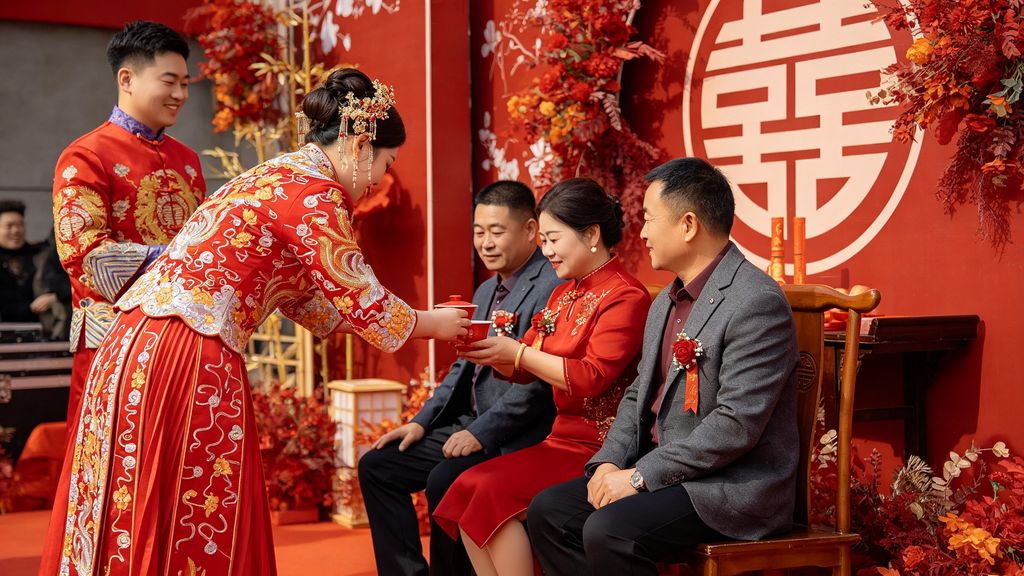
Traditional Chinese weddings follow "six rites", simplified in modern times to: proposal, engagement, picking a lucky date, the ceremony, and the bride homecoming visit.
Bride price and dowry: the groom family gives the bride price (cash, house or car), the bride brings a dowry - symbolising the union of two families and their sincerity; amounts vary hugely by region.
Picking the date: days marked "good for marriage" on the almanac are most wanted, and holidays (National Day, Spring Festival) see wedding surges; even dates (8/8, 10/10) mean pairing and good fortune.
On the day: the groom retrieves his bride (door-blocking games, finding the shoes), the couple serves tea to parents as they switch to "mom and dad", the motorcade parades, and at the banquet guests give red packets as the couple toasts.
The red theme: red xi characters, red dresses (bridal xiuhe gowns), red invitations - red means joy and luck; guests say "newlywed happiness" and "a hundred years of harmony".
Guest etiquette: red packets run 300-1,000 yuan (friends) with a written blessing; wear festive colours (avoid all white); arrive on time and follow seating.

