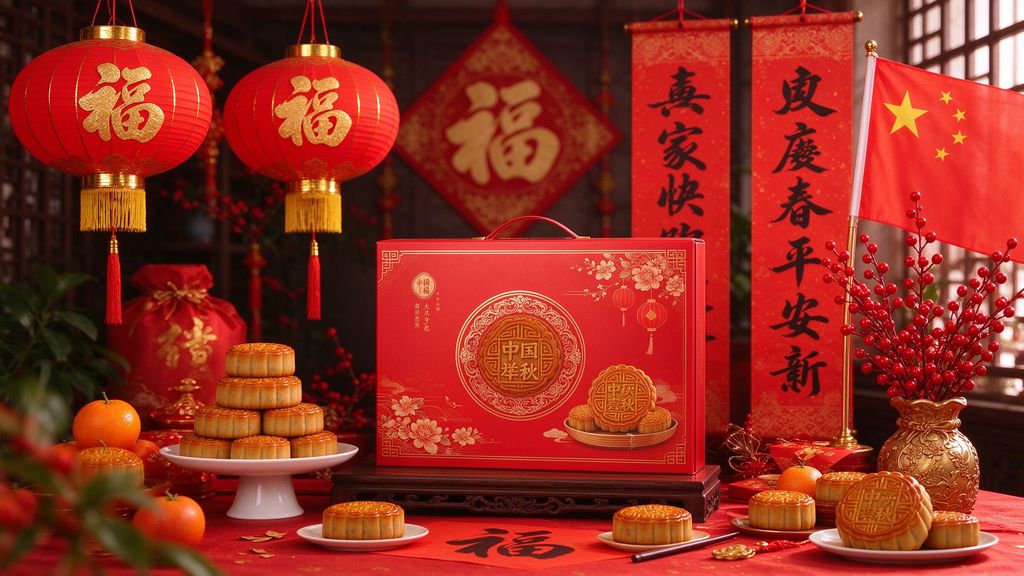
The Mid-Autumn Festival falls on the 15th day of the eighth lunar month - the midpoint of autumn, hence its name. The moon is roundest and brightest then, and since Chinese believe "a full moon means a reunited family", it is a day for families to gather.
The soul of the festival is the mooncake: round like the moon, symbolising reunion, with fillings from lotus paste, red bean and five-nut to salted egg yolk - in Cantonese, Suzhou and Beijing styles.
Legend says Chang'e swallowed her husband Hou Yi's elixir of immortality, flew to the moon palace, and has lived apart from him ever since. Each year people gaze at the full moon and imagine her there - the story of "Chang'e flying to the moon".
Customs: families set out mooncakes and fruit to admire the moon; children parade with lanterns; in the south, some places keep the "burning pagodas" and "fire dragon dance" traditions.
The festival has been an official holiday (one day) since 2008. For the most traditional experience, join a lantern fair or celebrate with a Chinese family over mooncakes.
Mid-Autumn Festival ranks second only to Spring Festival in Chinese hearts. On the 15th of the 8th lunar month the moon is roundest; no matter how busy, people want to go home to celebrate with family.
Its origin relates to the moon. Ancient custom "autumn evening moon worship": at autumn dusk, worship the moon, thanking the harvest. By the Tang dynasty moon-gazing at Mid-Autumn became fixed custom.
The most important activities are moon-gazing and eating mooncakes. The family moves a table to the courtyard, sets out mooncakes and fruit, eats and gazes at the moon, chatting and laughing - the happiest moment.
The ancients had boundless imagination about the moon: legend says the Cold Palace holds Chang'e and the jade rabbit; Wu Gang chops the osmanthus tree in the moon palace, chopping forever as it regrows.
These beautiful legends make the moon mysterious and romantic. Seeing the full moon, Chinese remember distant family and the poem: "raise head to gaze at the bright moon, lower head and think of home."
Mooncakes are the festival food. Rich fillings: lotus paste, bean paste, five-nut, egg yolk... now even ice-cream mooncakes. Gifting mooncakes to relatives and friends is festival etiquette - "light gift, deep feeling".
Besides moon-gazing and mooncakes, there is "walking the moon": people stroll in moonlight, crossing bridges and streets, enjoying the cool autumn night. Children carry lanterns and run in the courtyard.
In China it is a public holiday, usually three days. If you celebrate it there, join a moon-gazing event or buy a mooncake to taste.
The moon holds a special place in Chinese culture: it represents longing, reunion and beautiful wishes. "The moon rises over the sea; a thousand miles apart, we share this moment."
The Mid-Autumn moon has stories in Western culture too: Western tales see a rabbit shadow on the moon; in China, Chang'e and the jade rabbit live there. Stories differ, but all humanity loves this moon. Next Mid-Autumn, wherever you are, look up - you will find what Chinese say about sharing the moon a thousand miles apart is true: we really are under the same moon.

