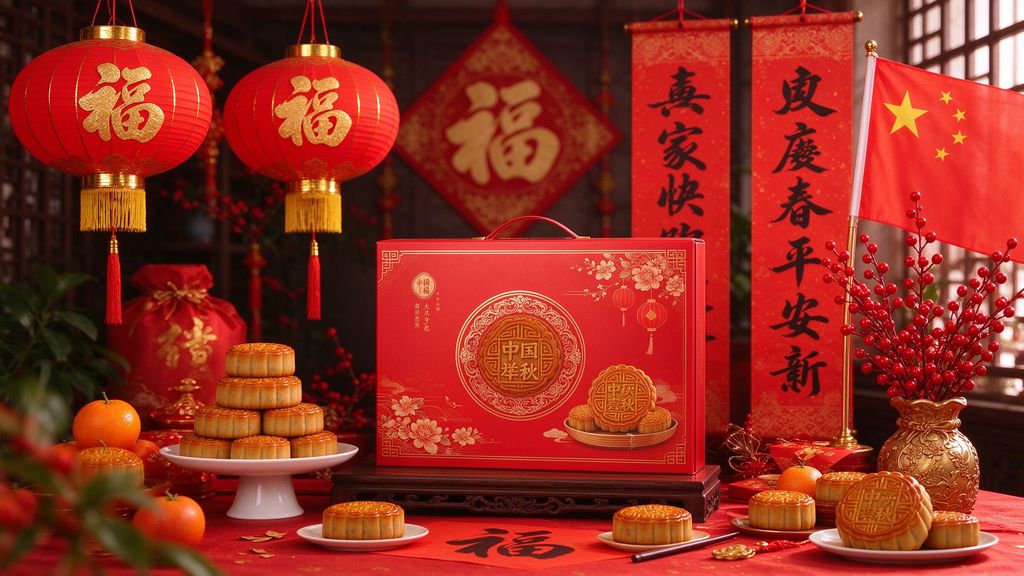
Spring Festival (the first day of the lunar new year) is China's grandest traditional holiday, the equivalent of Christmas. The week before, called "Little New Year", sees a country-wide spring clean, door couplets, shopping for goodies - and the great travel rush as workers head home.
New Year's Eve is the climax: the whole family gathers for the reunion dinner (dumplings in the north; rice cakes and tangyuan in the south), watches the CCTV gala, stays up past midnight, and greets the new year with firecrackers and fireworks.
Legend says the monster Nian feared red, fire and noise - hence red couplets and firecrackers. Elders give children hongbao (red envelopes) of "lucky money" to ward off evil and bless the year.
New Year's Day brings visits to relatives; the second day is for visiting the wife's family; the fifth welcomes the God of Wealth; and the 15th - Lantern Festival - closes the season with lantern displays and tangyuan. In all, the festival runs 15 days.
For foreigners the highlights are a reunion dinner with Chinese friends, a dragon and lion dance, and a temple fair. If you visit in January-February, book trains and hotels far in advance.
Spring Festival is the most important holiday of the Chinese year, the equivalent of Western Christmas. Also called "guònián", it starts on the first day of the first lunar month and lasts about fifteen days, ending at the Lantern Festival.
The "nian" of Spring Festival is a legendary monster. It came out to eat people every New Year eve; people found it feared red, firelight and loud noise, so they used red paper and firecrackers to drive it away. "Guònián" means "getting past the year monster".
Preparation is called "busy for the new year": a thorough cleaning to sweep away last year dust and bad luck; putting up spring couplets on doors; posting fu characters upside down so "fortune arrives".
On New Year eve the family shares the reunion dinner and stays up until dawn. Dishes carry meanings: fish means "surplus year after year", dumplings look like ingots, rice cake means "rising step by step".
On the first day people wear new clothes and visit relatives to greet the new year, saying "new year good" and "congratulations on wealth"; elders give children red envelopes (lucky money) - the amount matters less than the blessing.
Festival activities: dragon and lion dances, firecrackers, temple fairs, lantern displays. Temple fairs sell sugar hawthorns, sugar figures and ring-tossing games - lively and fun.
For Chinese the greatest meaning is "reunion". People working away from home hurry back before New Year eve. Chunyun (spring travel) is the largest human migration on earth.
If you spend Spring Festival in China, try: making dumplings, setting off fireworks, receiving red envelopes. Remember: "chūnjié" Spring Festival, "guònián" celebrating the New Year, "hóngbāo" red envelope, "bàinián" New Year greetings.
Spring Festival is the warmest Chinese memory and the "homecoming" in every Chinese heart.
Spring Festival has a special phenomenon, "chunyun": around the festival, billions of trips are made by train, plane and bus to go home. Media worldwide report this spectacle. If you come to China during the festival, you will see cities emptier but richer in festive mood - red lanterns along streets, firecrackers everywhere. Every day of the festival feels like a grand celebration. This is the festival Chinese love most.

