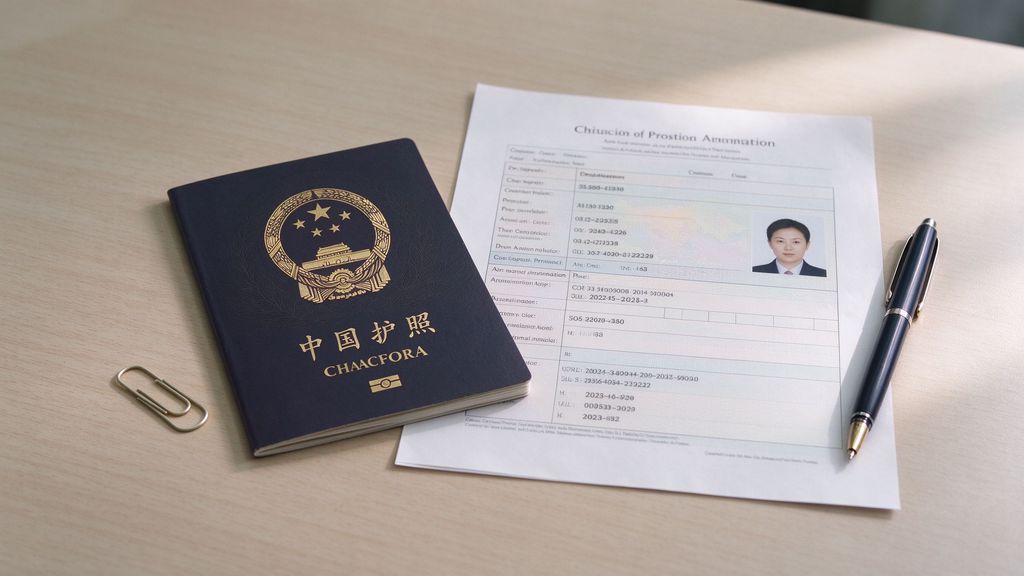
China visas are categorized by letters: L for tourism, M for business, F for visits, Z for work, X for study and Q for family visits. The number beside the letter marks the subtype — X1 is long-term study, X2 is short-term study.
Can you be rejected for choosing the wrong type? Possibly. A tourist visa cannot be used for work, and a work visa cannot be used for study. Before applying, ask yourself: what am I going to China for, and how long will I stay? Then pick the right category.
Most visas are valid for 3 months to 1 year, allowing stays of 30 to 180 days. When in doubt, ask the China Visa Application Service Center or check the official website. Get the type right and everything goes smoothly.
Coming to China, which visa type to choose? China issues many types; the most common: L (tourism), M (business), F (visit), Z (work), X (study).
L is the tourist visa: for travel, short family visits and cultural events. Stays are generally 30-90 days.
M is the business visa: commercial activities, trade talks, market research. Needs an invitation letter from a domestic company; stays usually under 90 days.
F is the non-profit visit visa: lecturing, exchanges and cooperative projects, but no paid work.
Z is the work visa: long-term employment. The employer first applies for a Foreigner Work Permit, then you apply for the Z visa with the permit notice.
X is the study visa: studying in China. First get the school Admission Notice and JW202 form, then apply for X1 or X2.
Beyond these five: Q (family visit), S (private affairs), R (talent), C (crew), G (transit), D (residence) and others.
How to choose? One principle: pick by "purpose of visit". Tourism L, work Z, study X, family Q. Wrong type may mean rejection or entry restriction.
The most common mistake: someone going to work applies for an L tourist visa to save trouble - if caught doing work-inconsistent activities, warning at best, deportation at worst.
Another point: visa types can be changed, but only inside China with solid reasons. To apply for a work visa abroad, you need the work permit first.
Difficulty varies by country: European and American applicants get L/M easily; some countries face extra review for Z/X. Check your local Chinese embassy site.
Fees differ by type: L and M are similar; Z and X may cost more. Expedited fees are separate.
Final advice: if unsure, call the local China visa application service centre, state your purpose clearly, and they will tell you the right type.
One more reminder: the visa type defines your legal activities in China. An L visa forbids work; do not try to enter on a tourist visa for employment - choosing the right type respects the law and protects your trip. If staying over a year, apply for a residence permit within thirty days of entry. Choose right, enter smoothly, travel with peace of mind.
Pick the right China visa type, and the road is smooth.

