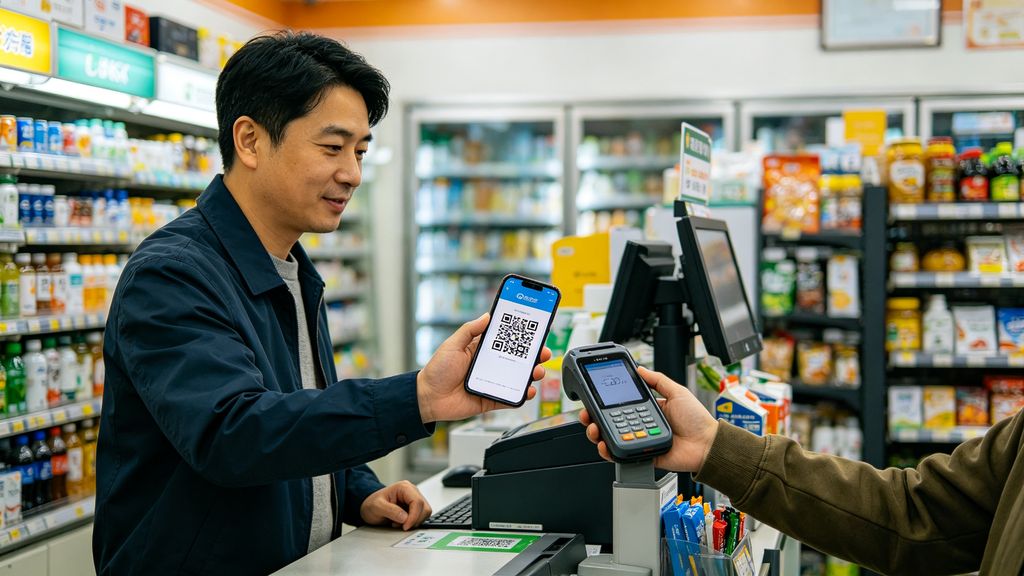
Foreigners who just arrive in China are most surprised—Chinese people don't carry wallets when they go out. Buy breakfast by scanning a code, take the subway by scanning a code, buy milk tea by scanning a code, even grandmas selling vegetables on the street hang up a QR code. Mobile payment is one of China's "New Four Great Inventions."
China's mobile payment is mainly two apps: WeChat and Alipay. WeChat is a social app, every Chinese uses it; Alipay is made by Alibaba, mainly for payment. Either one, link a bank card and you can pay. When paying, open the app, scan the other person's QR code, enter the amount, enter your password or face ID, done—takes one second.
How convenient is mobile payment? First, no change. No matter how much, just scan—no worrying about counterfeit money. Second, there's a bill. Every purchase is recorded, at the end of the month you can see where your money went. Third, it does everything. Pay utilities, top up phone credit, buy movie tickets, call a ride, rent a bike—all on your phone, no need to go out.
Now foreign visitors can also use mobile payment. WeChat and Alipay both support linking foreign credit cards (Visa/Mastercard), although there's a small handling fee (about 3%), it's much more convenient than exchanging cash. Before coming, link your card in the app—once in China, just scan to pay, no need to exchange RMB at the bank.
Mobile payment is indeed convenient, but it also has problems—what if your phone dies? What if there's no internet? That's why Chinese people still carry a little cash as backup. Also, mobile payment makes "spending feel effortless"—you spend more without noticing, so everyone should still spend rationally.

