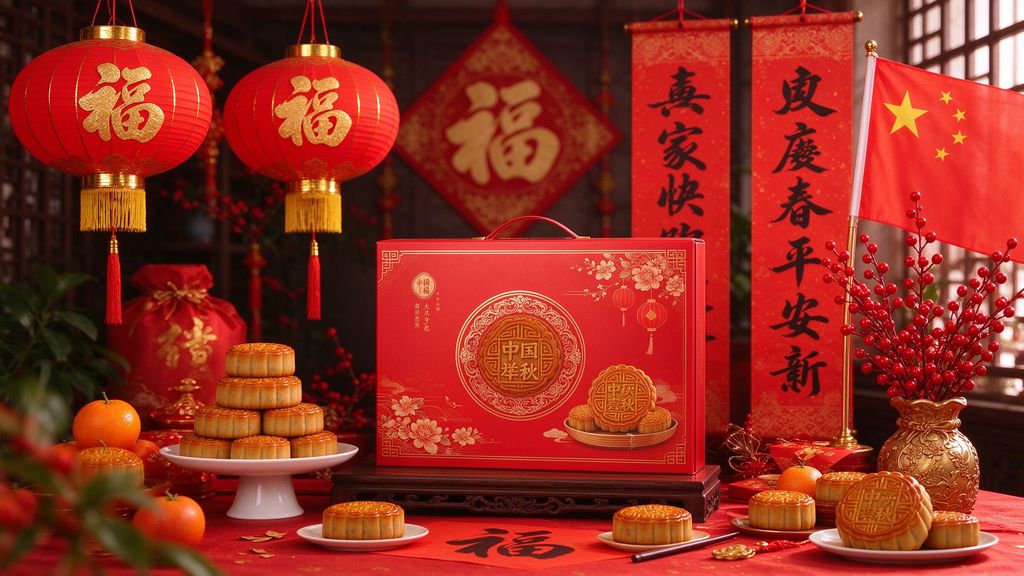
The 15th day of the 8th lunar month is the Mid-Autumn Festival, a day of family reunion. The moon is full and bright, and Chinese people enjoy mooncakes while admiring it.
Legend says there were once ten suns in the sky. The hero Hou Yi shot down nine and saved everyone. His wife Chang'e ate the elixir of immortality and flew to the moon. Hou Yi missed her so much that on the fullest moon night he laid out her favorite fruits and snacks. People have done the same every Mid-Autumn since.
Mooncakes are round like the moon and symbolize reunion. They can be sweet or savory, filled with red bean paste, lotus paste, egg yolk or five-kernel mix. If you are in China for Mid-Autumn, enjoy the moon with friends, eat a mooncake, and listen to the story of Chang'e.
Mid-Autumn Festival falls on the 15th day of the 8th lunar month, China second-biggest reunion holiday after Spring Festival. The name means "the middle of autumn" - this night the moon is fullest and brightest, and a full moon symbolises reunion, so it is also called the Reunion Festival.
The festival is inseparable from mooncakes: round pastries filled with red bean, lotus seed, five-nut or egg yolk, symbolising family unity. They appear in gifts, family feasts and moon-gazing. New styles like snow-skin and ice-cream mooncakes exist, but classic Cantonese and Suzhou styles remain mainstream.
The legend: Hou Yi shot down nine suns and received an elixir of immortality; his wife Chang e secretly drank it and flew to the moon. She has lived in the Moon Palace ever since, with only a jade rabbit for company. On this night people look at the moon as if they can see her silhouette - Chang e Flying to the Moon is China most famous moon legend.
Customs: family sits together at night, eats mooncakes and pomelo (you sounds like "bless"), lights lanterns and solves lantern riddles; some regions hold fire-dragon dances and moon worship.
The festival and poetry: Su Shi Song-dynasty masterpiece Prelude to Water Melody asks "when did the bright moon first appear? I raise my cup and ask the sky" and wishes "may we live long and share this moonlight a thousand li apart". Set to music, it is the festival signature song.
Visitor tips: the holiday (usually 3 days) is a family peak - restaurants and transport fill up fast, book ahead; join park moon-gazing events or buy authentic mooncakes from old shops to feel the atmosphere.
Another custom worth knowing: gifting. Mid-Autumn is the second-biggest gifting season after Spring Festival - mooncake boxes, fruit (pomelo especially) and tea are the usual presents. If invited to a Chinese home for the festival, bring a box of mooncakes; it is the most proper courtesy. This mutual-gifting warmth is the heart of the festival human touch.
A practical warning on mooncakes: "premium mooncakes" pushed at scenic gates and tourist buses are usually ordinary goods; for authentic ones choose established brands (Guangzhou Restaurant and Lian Xiang Lou in Guangzhou, Daoxiangcun in Beijing). Check production dates - mooncake shelf life is usually only 30-90 days.

