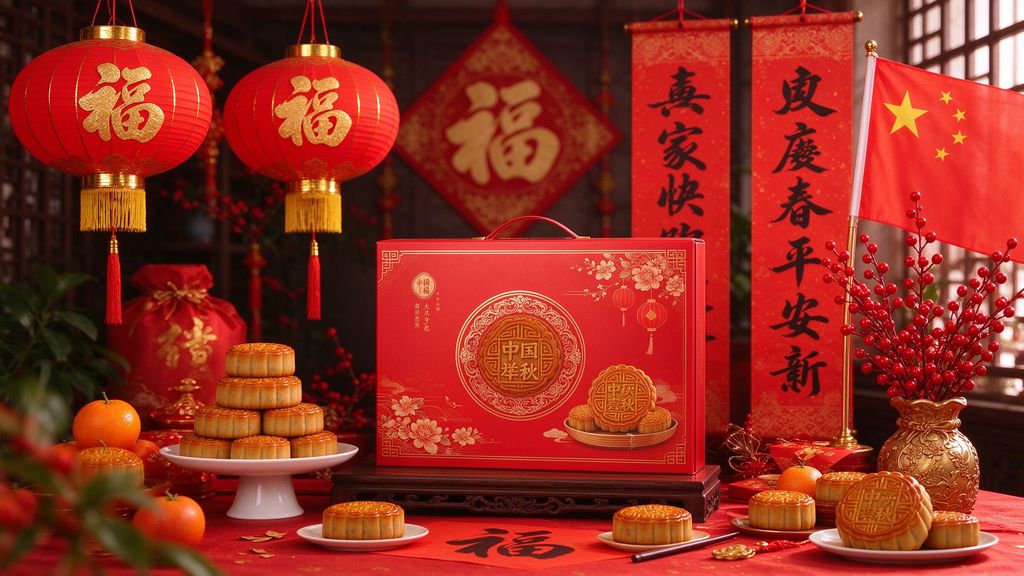
The Spring Festival is China's most important holiday, like Christmas in the West. It falls in January or February. Families gather for a reunion dinner, watch the Spring Festival Gala and set off fireworks.
Legend says a monster called Nian came every winter to eat people. People discovered Nian was afraid of the color red and loud noises, so they wore red clothes, put up red couplets and set off firecrackers to scare it away. That is the story behind 'guo nian' (celebrating the New Year).
Children love Spring Festival most — they get red envelopes with money inside! The red envelope symbolizes good luck. People greet each other with 'Xin Nian Kuai Le' (Happy New Year) and 'Gong Xi Fa Cai' (Wish you wealth). The holiday lasts 8 days and triggers the world's largest human migration, as everyone travels home by train and plane.
Spring Festival (Lunar New Year) is China most important traditional holiday - roughly Christmas plus New Year in one. On the first day of the first lunar month the whole country takes 7-8 days off, and hundreds of millions travel home in the largest human migration on earth: chunyun.
The preparations have their own calendar: on the 24th of the 12th lunar month, sweep the house - a big clean to welcome the new; on the 28th, paste window flowers - couplets, fu characters and paper-cuts in red, the festival main colour, symbolising joy and luck; on New Year Eve, stay up late - eat the reunion dinner and watch the CCTV gala.
The reunion dinner is the heart of the festival: northerners eat jiaozi, shaped like gold ingots for wealth; southerners eat nian gao, meaning "rising higher each year"; fish is a must, as "fish" sounds like "surplus" - wishing abundance year after year. The family gathered around the table is the warmest moment of the Chinese year.
New Year morning: younger people pay respects to elders and receive hongbao (red envelopes) with money inside - red for warding off evil and blessing safety. With smartphones, WeChat red packets dominate now, but the fun of grabbing them remains.
Taboos: no scissors (might cut luck), no sweeping (might sweep luck away), no unlucky words. Everywhere there are temple fairs, lion and dragon dances and fireworks.
For visitors, Spring Festival is the best time to experience Chinese New Year atmosphere - but book flights and hotels early; it is the busiest season of the year. Watch local notices for fireworks and temple fair schedules.
Two practical notes: train tickets go on sale 15-30 days ahead and hot routes sell out within minutes - buy at the first moment; on New Year Eve many restaurants serve only set reunion dinners, not à la carte, so book a week ahead. If you plan to experience the festival, schedule after the third day of the new year, when crowds ease.
A cultural note: around Spring Festival many small shops close and couriers pause, while malls, supermarkets and sights stay open. If you spend the new year in China, stock up on food and cash and check local holiday hours. Yet from another angle, the usually crowded city suddenly quieting down is the most special time to feel a Chinese New Year.
A cross-cultural observation: foreigners first spending the New Year in China are struck by quiet streets alongside lively homes - fewer cars, but laughter behind every window. Spring Festival is fundamentally a family festival; its core is not spectacle but reunion. Grasp this and you grasp its soul: however far, come home.

