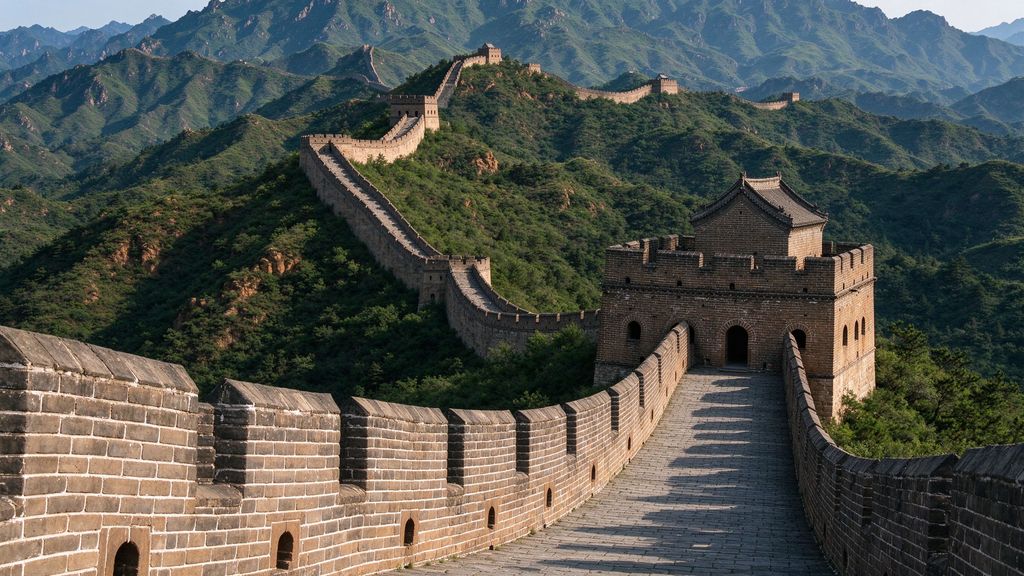
The Great Wall is China's most famous building, over 2,000 years old. It runs from the sea in the east to the desert in the west — more than 20,000 km in total, which is why it is called the 'Ten-Thousand-Li Wall'.
Long ago, enemies often came from the north to steal. After unifying China, Emperor Qin Shi Huang connected many small walls into one great wall to protect his people. Later dynasties rebuilt it — the wall we see today is mostly from the Ming Dynasty.
Chinese people say: 'You are not a true hero until you have climbed the Great Wall.' Many foreigners visit the Wall first when they come to China. It is a UNESCO World Heritage site and a symbol of pride for the Chinese people.
First decide which section you are visiting. Near Beijing, Badaling is the most famous: easiest transport (high-speed rail + shuttle, about an hour), full facilities, ideal for first-timers in a hurry. Mutianyu is farther but prettier and less crowded, with cable car and toboggan. Juyongguan is known for its grand gate-tower; Simatai is the steepest and offers night tours.
Fitness prep: steps are uneven and some slopes reach nearly 40 degrees. Wear grippy trainers, bring water and snacks; sunscreen in summer, windproof layers in winter. Badaling has a cable car (north) and ground cable car (south); Mutianyu has cable car plus toboggan - no need to hike if you prefer.
Tickets and booking: Badaling peak-season ticket is RMB 40 and requires real-name reservation in advance via the official public account or app; Mutianyu around RMB 45. On public holidays queues are huge - go on a weekday or before 8am.
A detail many miss: the "Hao Han Bei" stone ("you are not a true man until you reach the Wall") exists on both south and north lines of Badaling, so no need to queue for photos. Walk a few hundred metres past the crowds toward a quieter watchtower for better views and atmosphere.
History: the Wall we see was mostly built in the Ming dynasty over about 200 years; total length exceeds 20,000 km across all dynasties and it is a UNESCO World Heritage site. Its original role was military defence and beacon signals, not a "border line".
Itinerary: the Wall plus the Ming Tombs is a classic day trip; for a lighter day, half-day at the Wall and an afternoon in the hutongs. Schedule the Wall for a clear day - layered ridges on a high-visibility day are unforgettable.
On photography and manners: the Wall is a World Heritage site - no carving on bricks, no climbing over barriers. Drones need local permission. Many sections are one-way, so just follow the flow. For that "empty Wall" shot, choose Mutianyu at sunrise or dusk - the battlements in backlight are stunning.
Finally, back to "you are not a true man until you reach the Wall": the line comes from Mao Zedong poem about the Long March, "the true man is not made until he reaches the Wall; we have tramped twenty thousand li". Today it is the Wall famous slogan. Standing on a watchtower gazing at the ridges, you understand why Chinese see the Wall as a symbol of strength and unity.

