Qu Yuan (c. 340-278 BC), a poet and statesman of the Chu state in the Warring States era, founded Chinese romantic literature; his masterpiece is Li Sao.
Life: born to a noble family, he served as a senior minister advocating an alliance against Qin; exiled after being framed, he drowned himself in the Miluo River when the Chu capital fell.
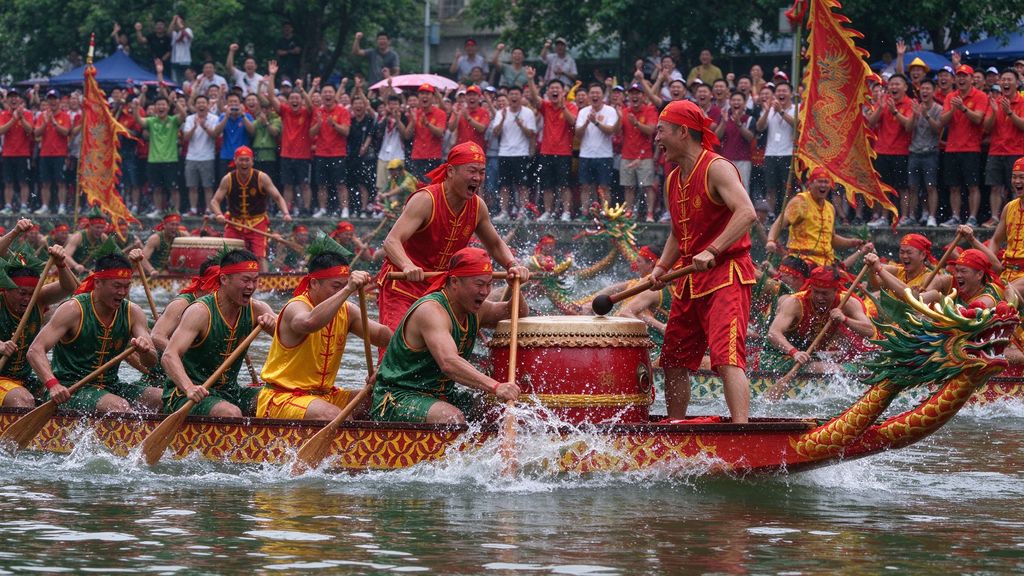
Dragon Boat origin: legend says people threw zongzi into the river and raced boats to protect his body from fish - gradually becoming festival customs; scholars note the customs may predate him.
Literary legacy: Li Sao is China first long lyric poem; "the road ahead is long, I will search high and low" is famous; Chu Ci founded the "fragrant grass and beauty" tradition.
Influence: Qu Yuan symbolises loyalty and patriotism; in 1953 the World Peace Council named him a world cultural figure.
Memorials: his hometown Zigui in Hubei and the Quzi Temple in Miluo, Hunan, host grand ceremonies every Dragon Boat Festival.
Qu Yuan (c.340-278 BC) is the first great poet of China and the figure honoured by the Dragon Boat Festival. His name is tied tightly to the most important traditional festival.
A noble of the state of Chu in the Warring States period, gifted and trusted by the king, he held high office and advocated reform to strengthen Chu.
But his integrity drew jealousy. Slander reached the king, who gradually distanced himself and finally exiled Qu Yuan to the remote south.
In exile he wrote the long poem Li Sao. Using fragrant herbs for virtue and beauties for ideals, he voiced love of country and anger at reality.
Li Sao is the first long lyric poem in Chinese literature, founding the "Chu ci" style. Posterity pairs Qu Yuan with the Book of Songs as "feng sao" - showing his status.
In 278 BC Qin troops took the Chu capital. Grieving and enraged, Qu Yuan drowned himself in the Miluo River on the fifth day of the fifth lunar month.
People rowed boats to rescue him and threw zongzi into the river so fish would not eat his body. Hence the festival dragon-boat races and rice dumplings.
For two millennia, every fifth day of the fifth month, Chinese eat zongzi, race dragon boats, hang mugwort and drink realgar wine to honour him. The festival spread to Japan, Korea and Vietnam.
His famous lines remain: "the road is long and far; I will search high and low." These words have inspired countless Chinese.
His patriotism and independence make him the symbol of noble purity in Chinese culture; his name means integrity and ideals.
If you are in China for the Dragon Boat Festival, eat a zongzi and watch a boat race - remembrance of a poet and a tribute to fine character.
The zongzi fragrance lasts a thousand years; Qu Yuan spirit passes through generations. Learning Chinese, you must know Qu Yuan.
The road is long; may every Chinese learner, like Qu Yuan, bravely pursue their ideals.

