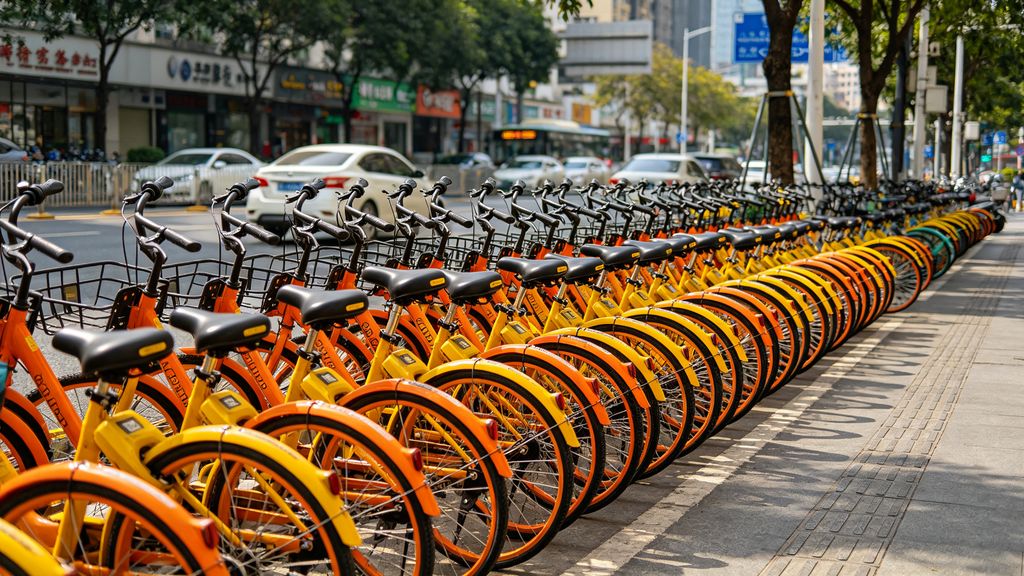
Walk through any Chinese city, and everywhere on streets and alleys you see colorful bikes—yellow Meituan, orange Hello, blue Qingju. This is bike-sharing, a street scene in Chinese cities.
How do you use a shared bike? First download an app (Meituan or Hello), do real-name verification, put down a deposit (many are now deposit-free). Then open the app, scan the QR code on the bike, the lock pops open automatically, and you can ride. When you arrive, park the bike in the white-lined area, lock it manually, and the app automatically charges and ends the trip.
Shared bikes solve the "last mile" problem. You get off the subway, still one or two km from work or home—too far to walk, too close to take a taxi. Ride a shared bike, there in 10 minutes, about one yuan. More convenient than the bus, faster than walking, cheaper than a taxi.
Shared bikes make a big impression on foreigners. Many foreign friends say China is so convenient—walking down the street, just scan one and ride, no need to buy your own bike, no worry about theft. In many countries, cycling is a hassle—you have to buy it, park it, lock it. In China, no worries at all.
Shared bikes also have problems. At first there were too many, parked everywhere on the streets, "bike graveyards" piled up like mountains. Later the government regulated it, designated parking areas, and charges for bad parking—now it's much better. Overall, shared bikes are one of China's most successful innovations, solving a big short-distance travel problem.

