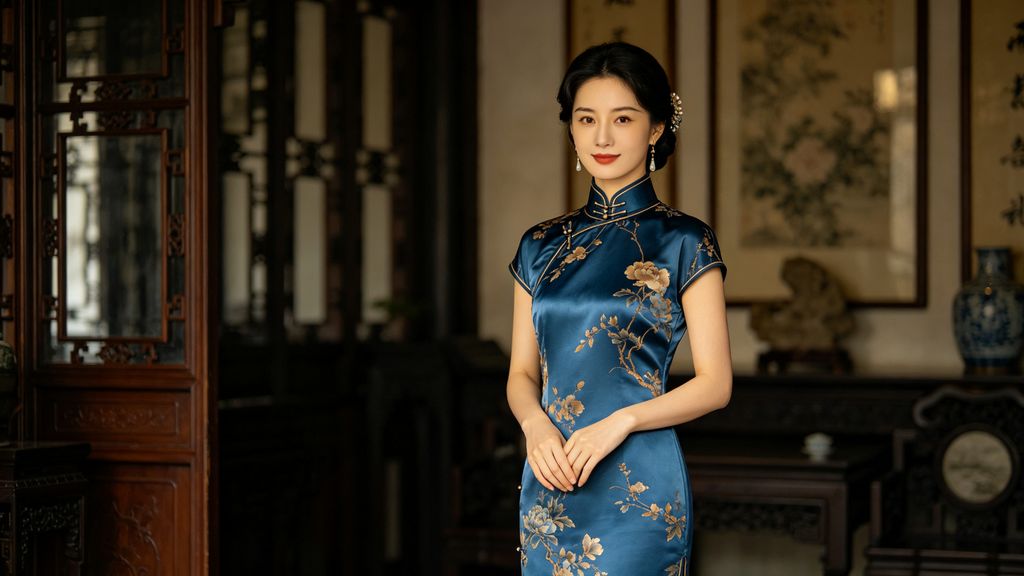
Qipao, also called "cheongsam," is the most representative traditional dress for Chinese women. It originated from Manchu banner women's clothing in the Qing dynasty, became popular in Shanghai in the 1920s, and later became the national dress for Chinese women. Qipao is fitted, with a standing collar, frog buttons, and side slits, beautifully showing a woman's silhouette.
Qipao has many styles. By length: long qipao (to ankle) and short qipao (to knee). By sleeve: long, mid, short, and sleeveless. By collar: high, low, and collarless. Different seasons and occasions call for different qipao. Long qipao for formal events, short for daily wear.
Qipao fabric is also important. The best qipao use silk or brocade, embroidered with flowers, birds, dragons, and phoenixes. Hand-embroidered qipao are the most expensive—one piece takes months to make. Now there are also everyday qipao made of cotton or linen, cheap and comfortable.
Tang suit is actually not Tang dynasty clothing—it was improved from Manchu horse jackets of the Qing dynasty. It features a standing collar, front opening, and frog buttons, usually in brocade. Tang suit is men's traditional formal wear, worn for New Year, weddings, and formal occasions. Modern Tang suits add contemporary elements like zippers and suit collars, evolving into "new Chinese style" clothing.
Nowadays, "new Chinese style" fashion is trending again. Young people combine qipao elements with modern tailoring, mix Tang suits with Western suits, creating a new look. Traditional Chinese clothing is not antiques—it can be fashionable and modern. Next time you visit China, consider buying a qipao or Tang suit as a souvenir.
The qipao and tangzhuang are the two most representative traditional Chinese outfits. Different in style, both show Chinese aesthetics and temperament.
The qipao, popularised in the twentieth century, originated from Manchu dress and absorbed Western tailoring to become fitted and elegant. Stand collar, knot buttons and side slit are its classic elements.
The tangzhuang has little to do with the Tang dynasty - it is modern clothing improved from traditional Chinese dress. Typical tangzhuang: stand collar, symmetrical front, knot buttons, a row of cloth buttons - solemn and festive.
Its most famous international moment: the 2001 APEC meeting in Shanghai, where leaders posed in matching red tangzhuang and every camera focused on the Chinese outfit. Since then tangzhuang became the name for "Chinese formal wear".
When do Chinese wear tangzhuang? New Year, weddings, celebrations, and visits of foreign leaders. Many elders love taking photos in it; babies wear red tangzhuang for full-month and first-birthday ceremonies, symbolising good fortune.
The qipao high moments are many: in the film In the Mood for Love, Maggie Cheung wore dozens of qipaos, each stunning; at international film festivals Chinese actresses often walk the red carpet in qipao.
The difference in short: the qipao is fitted and graceful, mostly for women on formal occasions; tangzhuang is loose, solemn and grand, wearable by all, better for festivals.
If you want to buy one to take home, try modified versions: qipao-style dresses for daily wear, shirt-style tangzhuang - Chinese flavour kept, easy to wear. Remember: "qípáo" qipao, "tángzhuāng" tangzhuang.
Wearing traditional Chinese dress is not just dressing up but an attitude - respecting China while embracing the world.

