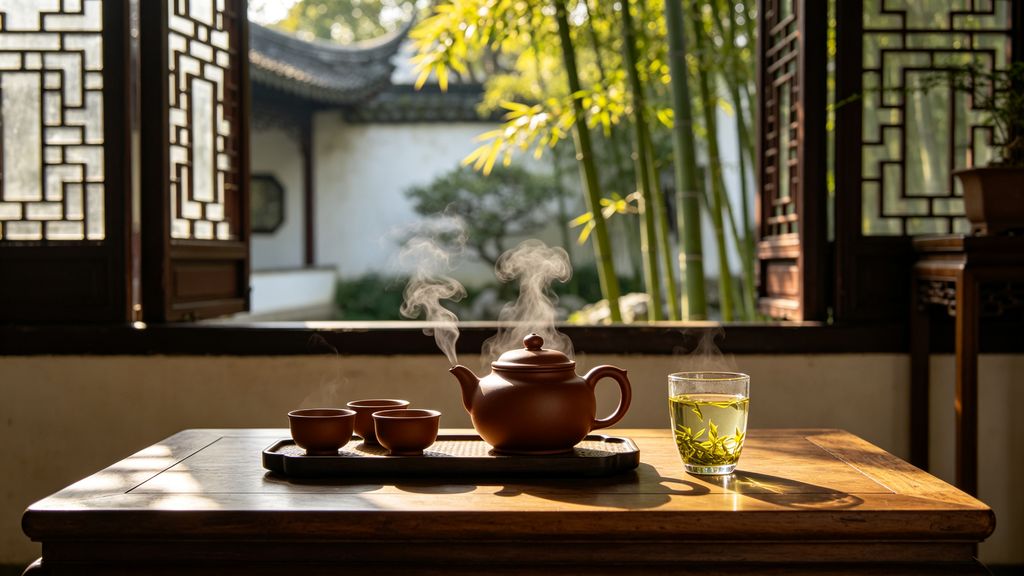
If you walk into any Chinese home, the host will definitely pour you a cup of tea. In China, tea is far more than a drink—it is a gesture of politeness, a way of socializing, and even a philosophy of life. From ancient scholars who paired tea with poetry and calligraphy to today's bubble tea shops on every street corner, tea has been woven into the fabric of Chinese identity.
China is the birthplace of tea, with over 4,000 years of history. Legend says the mythical emperor Shennong discovered tea when leaves accidentally blew into his boiling water. Chinese tea is divided into six major categories: green, black, oolong, white, yellow, and dark tea. Each type has its own flavor and brewing method—green tea needs water at around 80°C, while aged pu-erh tea requires boiling water.
In Chinese social life, "having tea" is almost synonymous with "having a chat." Friends meet up for tea, business deals are negotiated in tea houses, and even apologies and reconciliations can be sealed with a cup of tea. There are many unwritten rules: never point a teapot spout at someone, fill cups only 70% full, and guests tap the table with two fingers to say thank you. These small customs reflect the Chinese tradition of showing respect through tea.
Today, Chinese tea culture is going global. Tea houses are no longer just gathering spots for the elderly—young people's trendy new-style tea shops are all over social media, and bubble tea chains have spread worldwide. But no matter how trends change, the Chinese attitude of calm and从容 when drinking tea stays the same. Next time you travel in China, take a seat in a tea house and savor a cup slowly—you'll taste the character of the whole nation in it.
Next time someone pours tea for you, remember to tap the table twice with your index and middle fingers to say thank you. It's a tiny gesture, but it's the first step into Chinese culture. Tea isn't about how expensive it is—it's about the state of mind you bring to it; travel isn't about how far you go—it's about how attentively you see the world.
Start with the basics of categories and brewing. Chinese tea divides into six types: green tea is unfermented, brewed around 80°C to keep freshness; black tea is fully fermented with a bright red brew, good with milk and sugar; oolong is semi-fermented with high aroma, best shown by gongfu brewing; white tea has the simplest process, sweet when new and mellow when aged; yellow tea is rare with a distinctive sweet note from its smothering step; dark tea (like ripe pu-erh) is post-fermented, can be aged for years and grows smoother.
Tea etiquette goes far beyond "fill seven-tenths". Traditional rules: serve with both hands and place the cup at the guest right hand; when the host refills, tap the table two or three times with the index and middle fingers (a legend traces it to a disguised Qianlong emperor pouring for a minister); never point the spout at anyone, as "spout" sounds like the word for disaster. These details still matter in etiquette-minded homes and teahouses.
Tea and health: green tea contains polyphenols and caffeine - energising, but avoid on an empty stomach; black tea is warming, good for cold-stomach types; oolong aids digestion after meals; pu-erh cuts grease, ideal with rich food. Still, no tea should be brewed too strong or drunk to excess, and pregnant women and poor sleepers should go easy after noon.
To taste authentic tea culture: Longjing Village in Hangzhou for tea gardens and fresh green tea; the teahouses of Chengdu People Park - bamboo chairs and gaiwan tea, the best "slow life"; Chaozhou gongfu tea, three tiny cups passed around with careful pouring; and the ancient pu-erh mountains of Yunnan, where you can stay and press your own cake of tea.
Finally, bring tea home: a good can of tea is a wonderful souvenir from China. Read origin and grade labels; avoid "sky-high tea" at scenic gates; taste before buying - most shops let you sample. Learning to brew tea is learning a language for getting along with Chinese friends.

