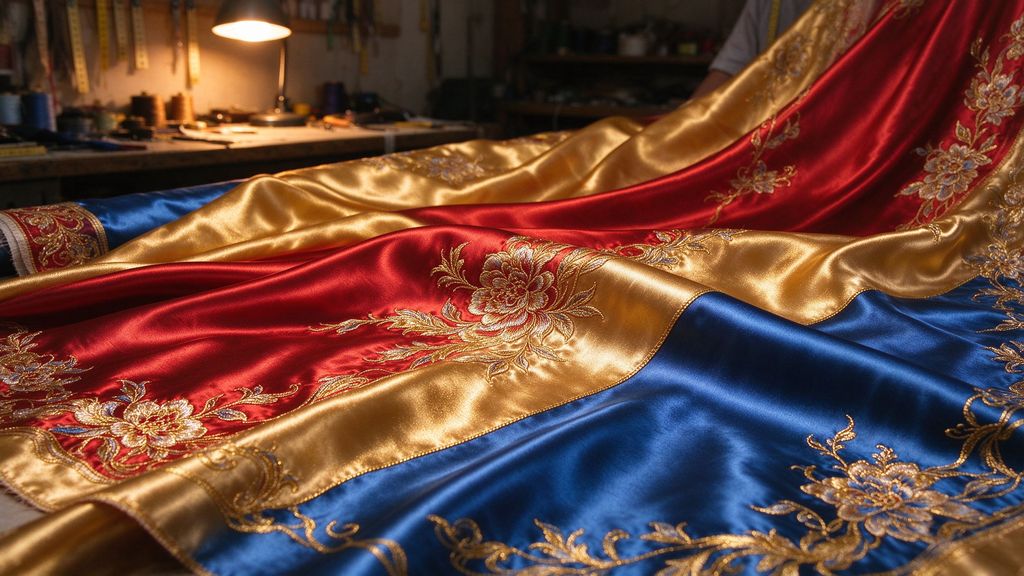
Over 2,000 years ago, China had a very precious product: silk. Foreigners loved it so much they would trade gold for it.
During the Han Dynasty, a man named Zhang Qian traveled west and opened the route from China to Central Asia and Europe. The road was over 7,000 km long, crossing deserts and mountains. Caravans carried silk, tea and porcelain west on camels, and brought back grapes, music and stories.
Why is it called the Silk Road? Because silk was its most famous product. It was not just a trade route — it was a bridge for culture, religion and friendship. Today China's Belt and Road Initiative aims to build a new Silk Road.
The name "Silk Road" came from 19th-century German geographer Ferdinand von Richthofen, because silk was its most famous cargo. But it carried far more: porcelain, tea, spices, medicines, gold and silver vessels, glassware - and even technologies like papermaking, gunpowder and printing travelled west along it.
Route overview: the classic Silk Road started at Chang an (today Xi an), passed through the Hexi Corridor (Wuwei, Zhangye, Jiuquan, Dunhuang), Xinjiang (Turpan, Kashgar), crossed the Pamir Plateau and reached Central Asia, West Asia and finally the Mediterranean - about 7,000 km, the longest trade route of the ancient world.
Key historical figures: Zhang Qian (first envoy to the Western Regions in 138 BC, called the man who "broke through the West"), Ban Chao (Eastern Han general), Xuanzang (Tang monk who travelled it to India for sutras), Marco Polo (came in the Yuan dynasty). Every name is a legend.
The route cities today: Xi an (Tang West Market ruins, Giant Wild Goose Pagoda), Dunhuang (Mogao Caves), Turpan (Grape Valley, Jiaohe Ruins) and Kashgar (Old Town, Fragrant Concubine Garden) are world-class destinations, each with distinct ethnic cuisine and culture.
Modern significance: the Belt and Road Initiative inherits the Silk Road spirit; China-Europe freight trains from Chongqing and Xi an reach Europe in 15-20 days, reviving the ancient route in a new era.
Route suggestion: Xi an → Tianshui (Maijishan Grottoes) → Lanzhou → Wuwei → Zhangye (Rainbow Mountains) → Jiayuguan → Dunhuang (Mogao Caves, Singing Sand Dunes) → Turpan → Urumqi, about 10-14 days, adjustable in segments.
A question visitors often ask: can you still "walk" the Silk Road today? Yes, in many ways. Driving the G30 Lianhuo Expressway roughly follows the ancient Hexi Corridor with stunning scenery; high-speed rail works too (Xi an-Urumqi line is open); cyclists challenge the Duku Highway and the Tianshan. Whichever you choose, put Dunhuang at the heart of the trip - Mogao Caves require booking about a month ahead, so plan early.
A Silk Road food list to flavour the trip: Xi an rou jia mo and lamb paomo, Lanzhou beef noodles, Zhangye cuoyu noodles, Dunhuang donkey-meat yellow noodles and apricot drinks, Turpan grapes and roast lamb, Kashgar baked buns and dapanji. The Silk Road is a food road; eating along the way, you understand the warmth of "food is the first necessity of the people".

